
The Story Between the Details: How Images Make Us Imagine What Happened Next
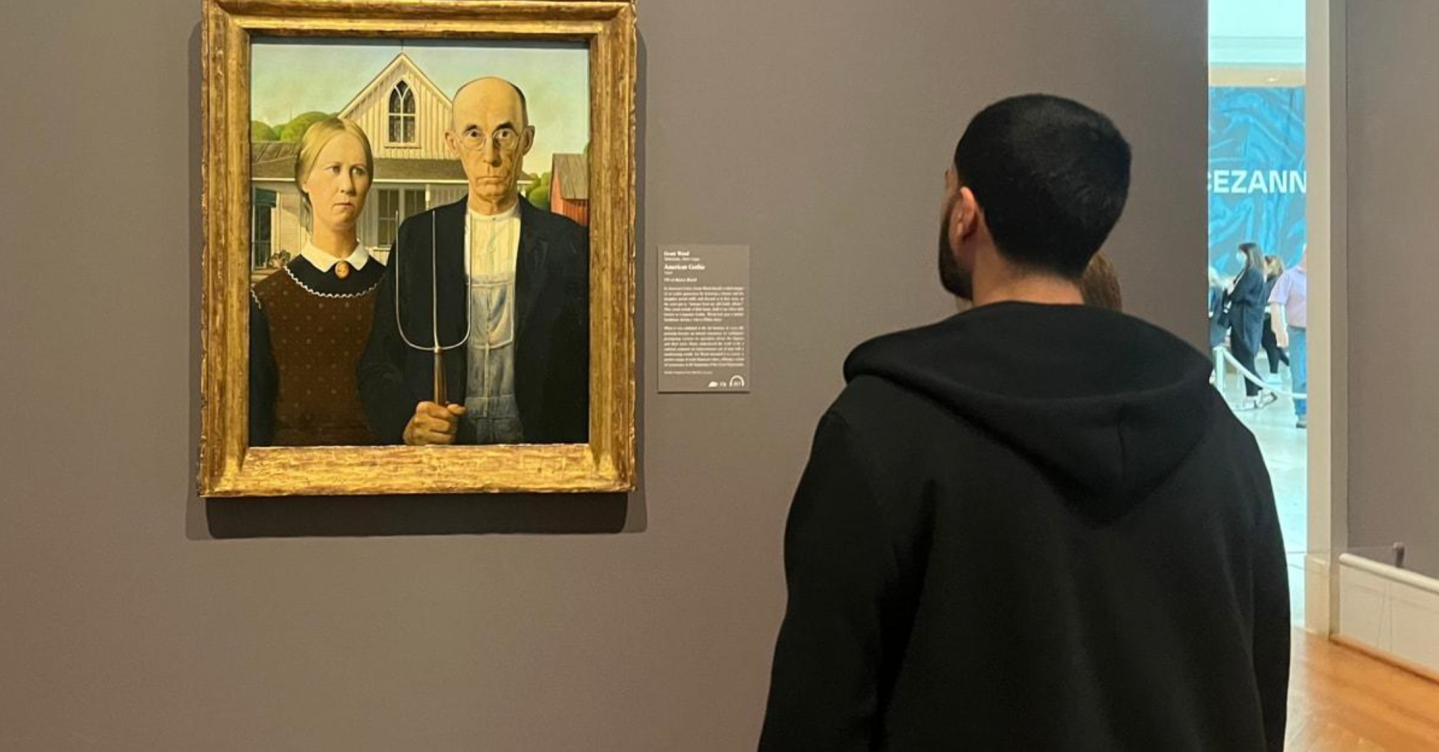
An image can tell a story without showing an entire beginning, middle, and end. Sometimes all it takes is a facial expression, an object, a strange position, or even an empty space to make us start asking questions. When we look at an image, we naturally try to fill in the information that is missing. We wonder who the people are, what happened before the picture was taken, and what might happen after it. This is what makes visual storytelling so powerful. The details in an image act as clues, allowing the viewer to become part of the storytelling process rather than simply receiving a finished story.
This idea can be seen across photography, painting, and visual art. Some images tell their stories through the expressions of their subjects, while others use composition, lighting, color, objects, or setting. The most effective images often leave something unexplained. Instead of giving the audience every answer, they create enough visual information for us to construct our own interpretation.
A Story Can Hide in an Ordinary Moment
Edward Hopper, Nighthawks
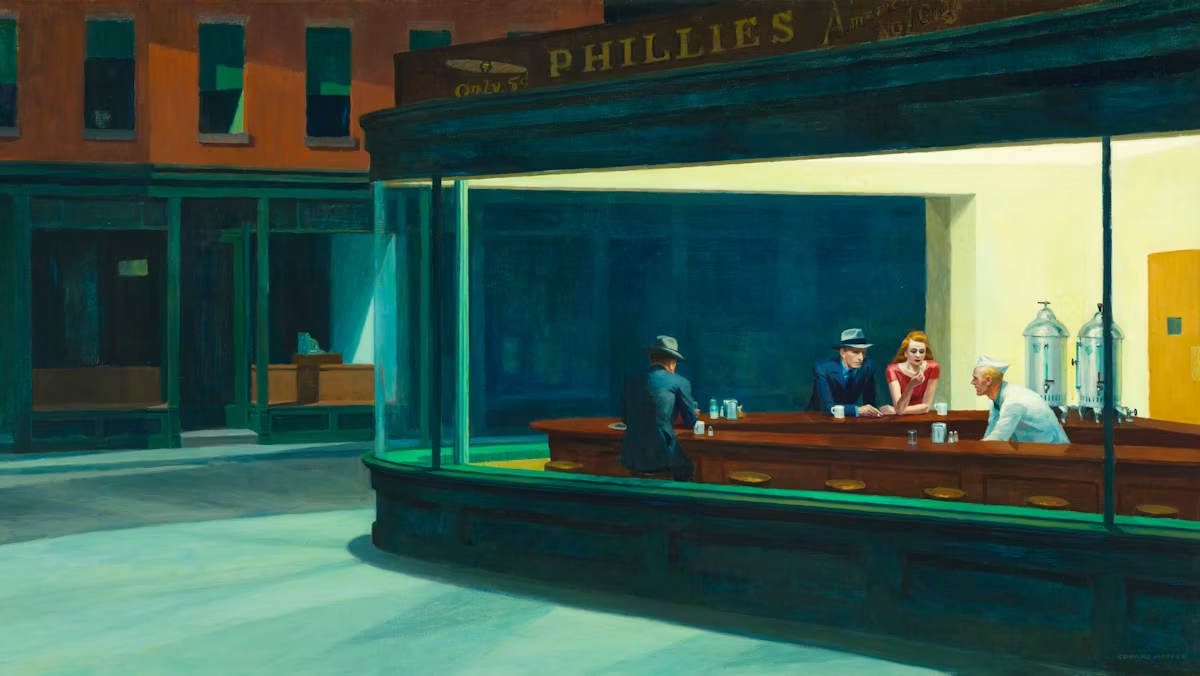
Edward Hopper’s Nighthawks is a good example of how an ordinary scene can feel like it has a much larger story behind it. The painting shows several people sitting inside a brightly lit diner late at night. At first, there does not seem to be much happening, but the details make the scene feel strangely mysterious. The people are physically close together, yet none of them appear to be communicating with each other. The man and woman sitting together seem particularly disconnected from the man behind the counter. Even the empty street outside contributes to the feeling of isolation. The bright fluorescent lighting makes the diner stand out against the darkness, almost like a place where people have temporarily escaped from the outside world. Hopper even leaves out an obvious entrance to the diner, making the viewer feel as though they are looking in from outside. The result is an image that makes me wonder why these people are awake so late and what brought each of them there. The painting does not give us those answers, which makes the viewer responsible for imagining them. The Art Institute of Chicago notes that the painting’s composition and lighting contribute to its feeling of modern isolation and introspection.
Source: Art Institute of Chicago — Nighthawks
Expressions Can Become Evidence
Dorothea Lange, Migrant Mother
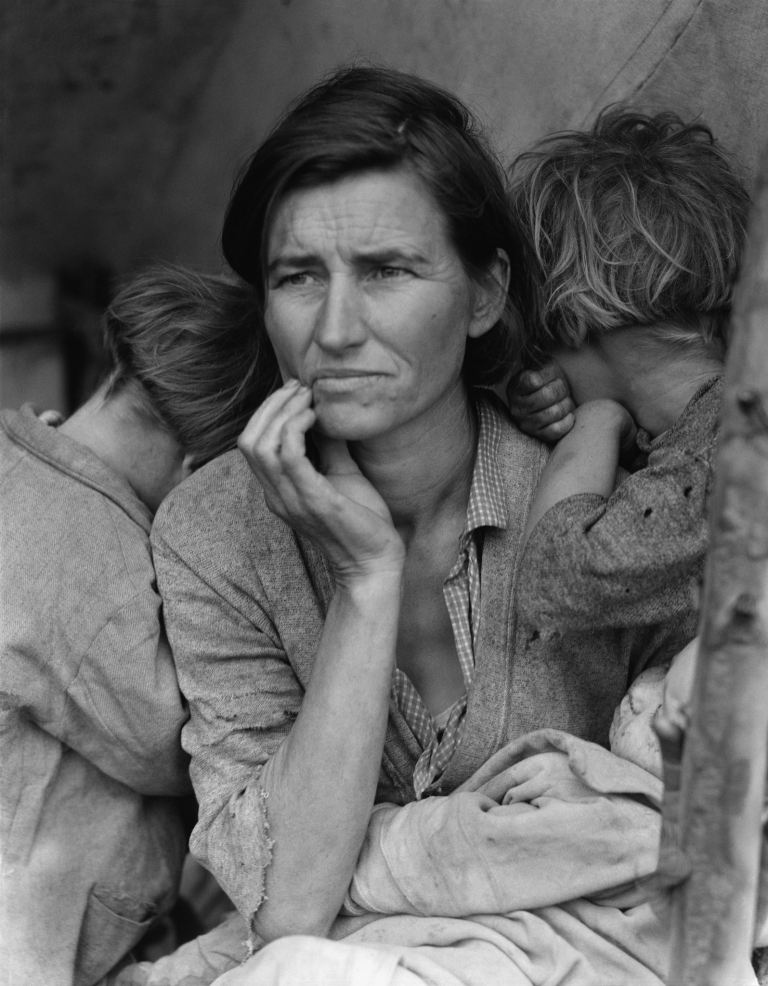
Dorothea Lange’s Migrant Mother tells a very different story, but it also relies heavily on details. The most important detail is the mother’s expression. She looks away from the camera rather than directly toward it, creating a feeling of worry and uncertainty. Her children hide their faces against her, which makes the mother appear responsible for protecting them even though she seems unsure of what will happen herself. Her clothing and the worn appearance of the photograph’s subjects also provide clues about their circumstances. Nothing in the image explicitly tells us that this family is struggling, but the combination of their clothing, body language, and facial expressions communicates hardship. The photograph becomes more than a portrait because the viewer can imagine the circumstances surrounding this moment. What happened to this family before the photograph? Where are they going afterward? Lange captures only one moment, but the details suggest a much longer story. The Library of Congress identifies the photograph as a 1936 image of migrant agricultural laborers in California.
Source: Library of Congress — Migrant Mother and Children
Objects Can Tell Us Who Someone Is
Grant Wood, American Gothic
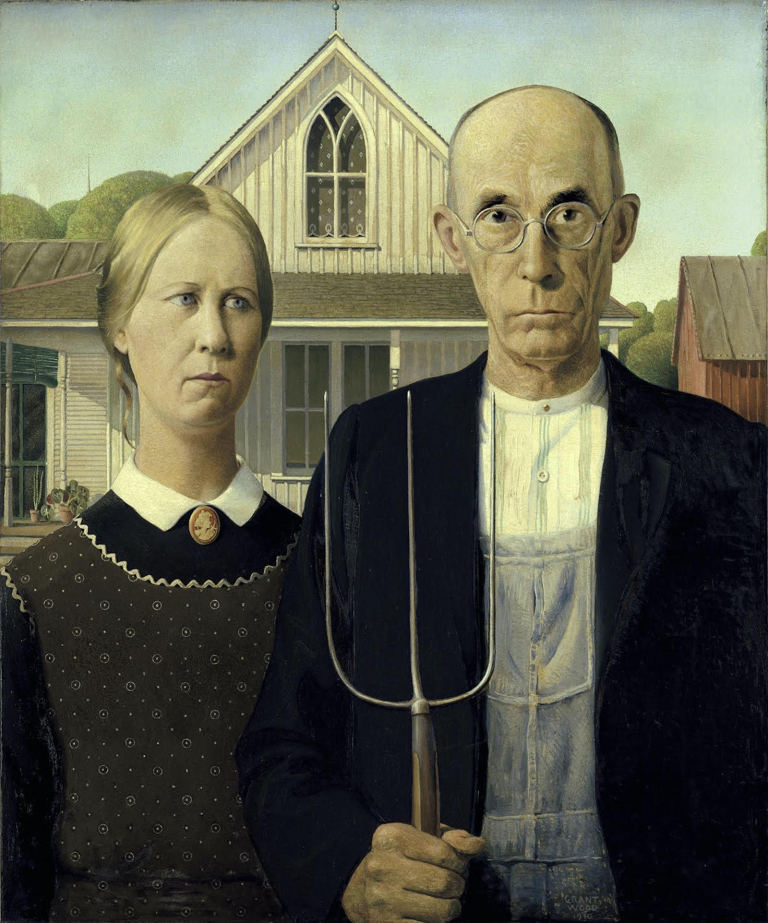
Grant Wood’s American Gothic demonstrates how objects can become storytelling devices. The most obvious object is the pitchfork held by the man, which immediately connects him to farming and rural life. His clothing, glasses, and serious expression reinforce that impression. The woman standing beside him wears a patterned dress, white collar, and brooch, giving her a different but equally specific visual identity. Even the house behind them contributes to the story. Its pointed window echoes the shape of the pitchfork, connecting the people to their home and environment. The characters’ stiff poses and expressions also make me wonder about their relationship. Are they father and daughter, husband and wife, or simply two people posing as characters? Interestingly, Wood actually used his sister and his dentist as models, imagining them as a farmer and his unmarried daughter. The details therefore create a believable fictional world even though the people themselves were not actually the characters they appear to be.
Source: Art Institute of Chicago — American Gothic information
Sometimes the Face Is the Entire Story
Steve McCurry, Afghan Girl
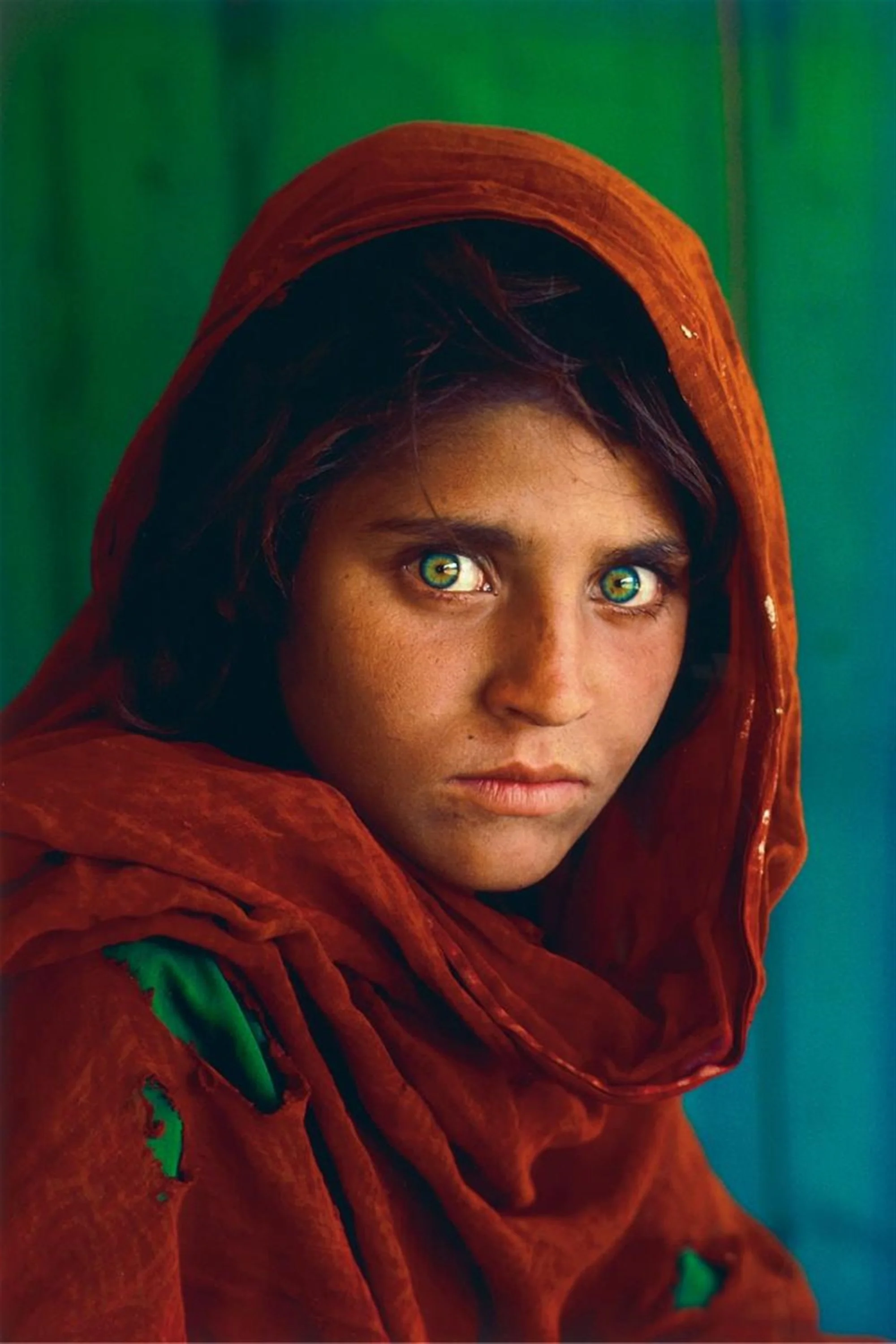
Steve McCurry’s Afghan Girl shows how a single facial expression can carry an enormous amount of narrative information. The first detail most viewers notice is the girl’s eyes. They immediately create a sense of intensity because she looks directly at the camera. Her expression is difficult to interpret completely. She could appear frightened, angry, curious, or simply cautious around the photographer. The red fabric surrounding her face contrasts strongly with her green eyes, making her expression even more noticeable. The image becomes more powerful because so much of her story is initially unknown. When the photograph was taken in 1984, she was a 12-year-old refugee living in Pakistan, and her identity was unknown to the public for many years. Knowing that context changes the way we interpret the details. The photograph demonstrates how a visual story can begin with a question: Who is this person, and what has she experienced?
Source: The Guardian — The Afghan Girl: A portrait of past and present
Composition Can Make Us Feel the Story
Lunch Atop a Skyscraper
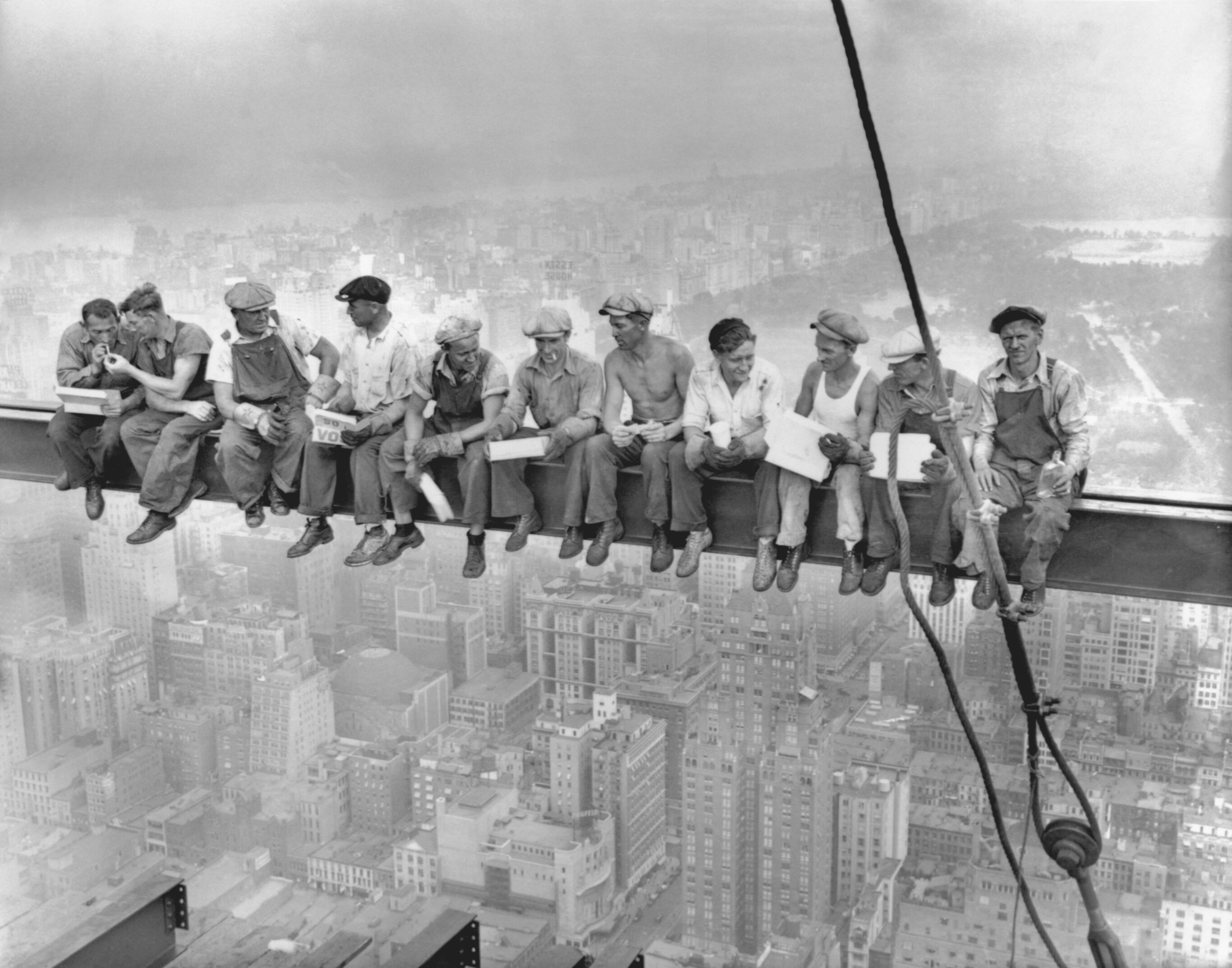
Lunch Atop a Skyscraper tells its story through composition and contrast. Eleven workers sit casually on a steel beam while the enormous city stretches hundreds of feet below them. Their relaxed body language is almost funny compared with the extremely dangerous setting. They appear to be having an ordinary lunch, even though the viewer immediately recognizes that this is anything but an ordinary place to eat. Their work clothes, boots, and position on the beam provide clues about their lives as construction workers. The enormous amount of empty space beneath their feet creates the tension that makes the photograph memorable. Interestingly, the photograph was actually staged as a publicity image during the construction of Rockefeller Center rather than being a completely spontaneous moment. That detail adds another layer to its story: the image is not simply documenting danger, but carefully constructing an image of confidence, toughness, and ambition.
Source: Rockefeller Center — History of Lunch Atop a Skyscraper
Scale Can Turn a Landscape Into a Conflict
Katsushika Hokusai, The Great Wave
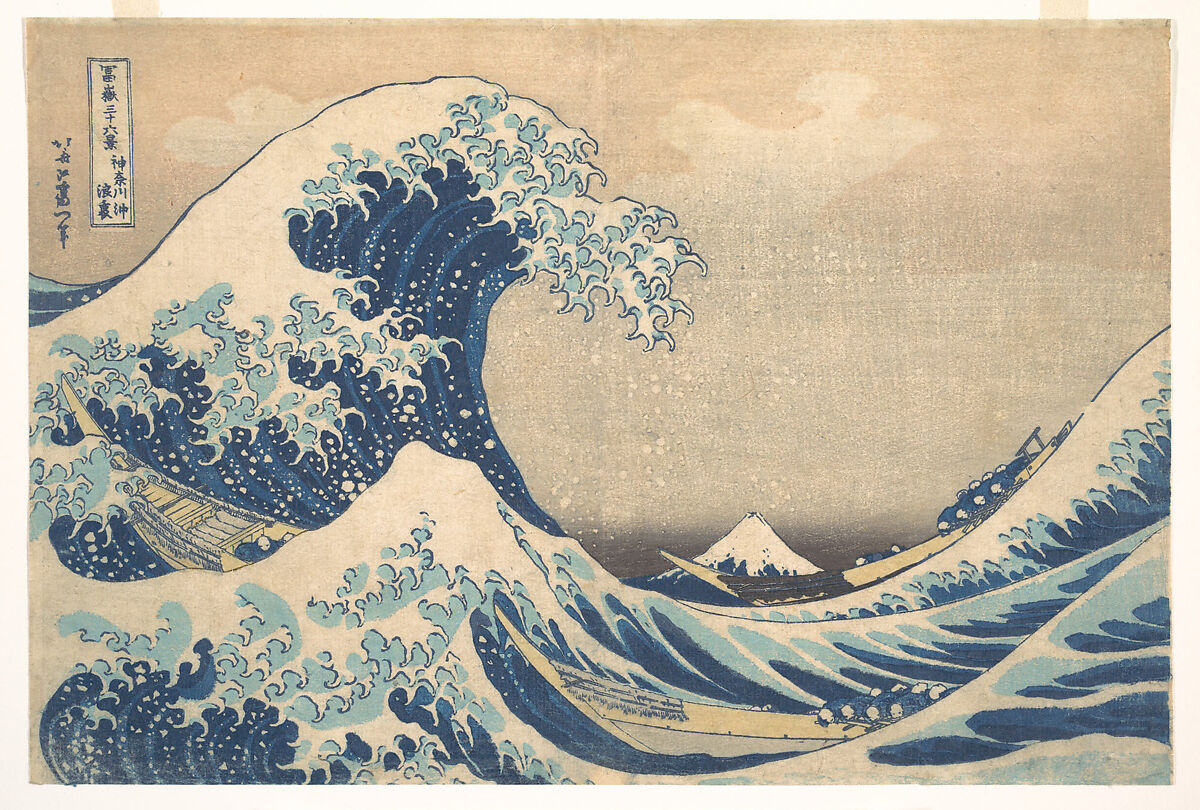
One of my personal favorite paintings, Katsushika Hokusai’s The Great Wave shows how visual storytelling can happen without facial expressions or human interaction. The enormous wave dominates the composition, curling over three small boats and making the people inside them appear almost insignificant. The size difference between the wave and the boats immediately creates a conflict: nature versus human beings. The wave’s curved shape also resembles a claw or monster reaching toward the boats, making the scene feel almost threatening. In the background, Mount Fuji is surprisingly small and calm compared with the chaotic wave. This contrast gives the viewer a sense that the fishermen are caught in a dangerous moment. We do not see what happened before the wave formed, and we cannot see whether the boats survive afterward. That missing information creates suspense. The Metropolitan Museum of Art specifically describes the wave as threatening the three fishing boats and notes how Fuji appears almost as though it could be swallowed by the wave. The composition therefore gives us the middle of a story and leaves us to imagine the ending.
Source: The Metropolitan Museum of Art — The Great Wave
Mystery Can Be a Storytelling Technique
René Magritte, The Son of Man
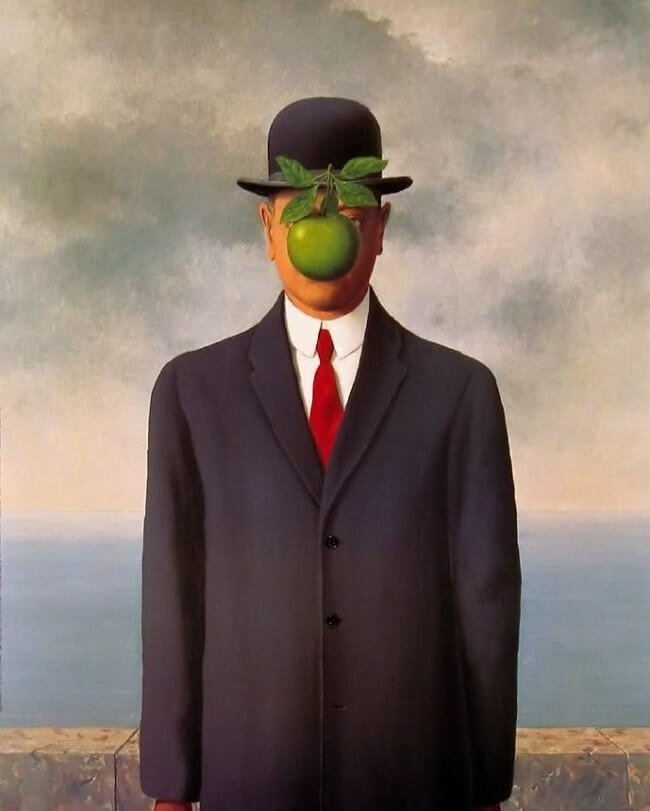
René Magritte’s The Son of Man demonstrates that visual storytelling does not always have to give us a logical narrative. The man is dressed formally in a suit and bowler hat, but his face is blocked by a bright green apple. That single detail changes the entire image. Instead of simply seeing a portrait of an ordinary businessman, we immediately begin asking questions. Who is the man? Why is his face hidden? Is he hiding something from us, or are we simply not supposed to know who he is? The apple becomes a visual obstacle that creates mystery. The man’s formal clothing and calm posture suggest normality, while the impossible placement of the apple creates something strange and unexpected. This is an example of how a visual can use contradiction to make an audience engage with it. Rather than explaining the meaning of the image, Magritte forces the viewer to participate in creating one. The painting has remained compelling partly because, as SFMOMA has discussed, it makes viewers think about the difference between what is visible and what remains hidden.
Source: renemagritte.org
The Details We Don’t See
Looking across these seven images, it becomes clear that visual storytelling is not simply about putting interesting things into a picture. It is about choosing details that make the viewer look closer and ask questions. Hopper uses light and empty space to create loneliness. Lange uses facial expressions and body language to communicate hardship. Wood uses clothing, architecture, and objects to establish identity. McCurry turns a person’s eyes into the emotional center of an entire story. Lunch Atop a Skyscraper uses scale and composition to create tension, while Hokusai uses scale and movement to turn a wave into an antagonist. Magritte takes the opposite approach and hides information, using mystery to make the viewer search for meaning.
What connects all of these images is that none of them tell us everything. They give us clues. The viewer has to connect those clues and imagine the parts of the story outside the frame. This is what makes details so important in visual communication. A small object, expression, color, or compositional choice can completely change the way we understand an image. Good visual storytelling trusts the audience enough to let them participate. Sometimes the most interesting part of a story is not what the image shows us, but what it makes us wonder about.
