
Sensational
Spaces
Sensational Spaces is a one‑week solo VR worldbuilding project created for GDD 175: Worldbuilding in Virtual Reality. The assignment challenged students to design a small, self‑contained “micro‑world” that evokes a strong sensory and emotional response. My goal was to build an intimate, lived‑in bedroom environment that feels familiar, comforting, and quietly atmospheric — a space that gently pulls the user out of reality and into a world that feels like it could be their own.
Role: Environment Artist, Technical Artist, Worldbuilder
Timeline: 1 week
Tools: Unity, Blender/Asset Libraries, Particle Systems, Spatial Audio
Platform: VR (Quest / PCVR)
The Problem
Designing Presence in a Small VR Space
VR worlds often rely on scale, spectacle, or interactivity to feel immersive. But this project asked the opposite: create a small, contained environment that feels emotionally rich through sensory design alone. Without gameplay or narrative, the challenge became:
How do you make a tiny VR space feel alive, familiar, and worth lingering in?
Users often struggle to feel grounded in VR environments when:
Spaces feel empty or artificial
Audio lacks depth or directionality
Lighting doesn’t match the intended mood
The environment doesn’t encourage natural body movement
Problem Statement:
VR users need a sensory‑rich micro‑environment that feels intimate and familiar enough to momentarily forget the real world, using atmosphere rather than interaction to create presence.
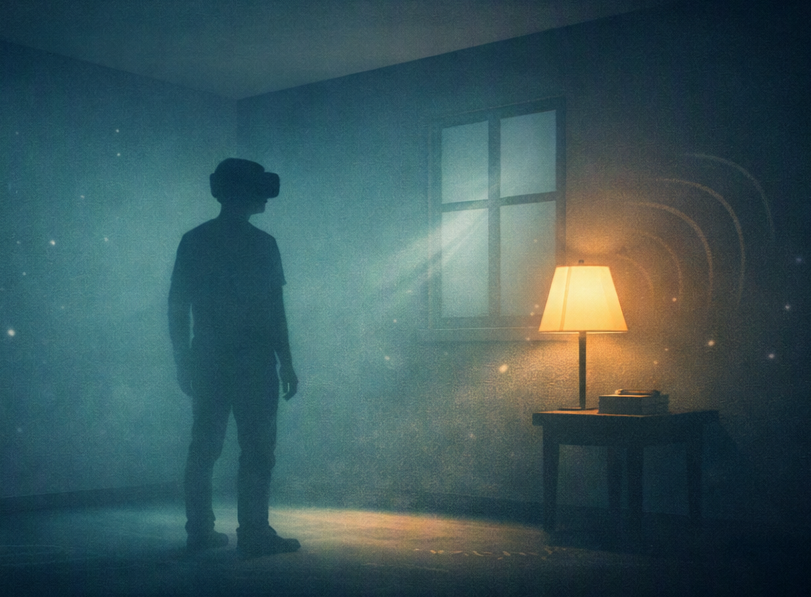
Design Challenge
Create a room‑scale VR world that:
Feels lived‑in and emotionally grounded
Uses lighting, sound, and subtle motion to evoke mood
Encourages natural body movement (leaning, crouching, looking out windows)
Engages multiple senses metaphorically
Works within the constraints of a small physical play area
Concept Development
Discovery & Sensory Research
I began by exploring how small spaces in VR can evoke emotion through sensory cues. I studied:
How lighting affects mood
How spatial audio influences presence
How clutter, props, and environmental storytelling create familiarity
How users naturally move inside confined VR spaces
Key insights:
Sound is one of the strongest anchors for presence
Small, detailed environments feel more believable than large empty ones
Users instinctively lean toward windows, corners, and objects
Weather cues (rain, wind, distant ambience) create emotional grounding
Theme Selection
The project required a one‑word theme. I chose the word familiar.
This theme guided every decision, from lighting to audio to object placement.
I chose to build a bedroom during a rainy night, filled with personal objects that suggest someone lives here. The goal was to create a space that feels like stepping into a memory — familiar, quiet, and emotionally warm.
Core Sensory Ideas
Sight: Warm interior lighting contrasted with a cold, rainy exterior
Sound: Rain intensifies as you approach the window; faint music leaks from outside the bedroom door
Touch (Implied): Soft fabrics, cluttered surfaces, objects placed at crouching height
Smell/Taste (Metaphorical): Dust motes, warm light, and rain particles hint at coziness and dampness
Environment Goals
Feel like a real bedroom someone just stepped out of
Encourage the user to explore corners, lean toward the window, and listen closely
Use subtle motion (rain particles, flickering light) to keep the space alive
I assembled the room using a combination of:
Assets collected from the Unity Asset store
Custom‑made props to create clutter and personality
Unity particle systems to simulate rain outside the window
Spatial audio zones to create directional sound
Key Elements
A rain‑soaked window with particle effects
A dimly lit bedroom interior
Personal objects scattered across the room
A faint music track positioned near the door
Ambient rain audio that grows louder as you approach the window
Assets I Created
The ceiling light
Light switch
Door
Window
The walls/ceiling and floors
The rain that you can see out the window.
Lighting
Warm, soft interior lighting to evoke safety and comfort
Cool, desaturated exterior lighting to contrast the storm
Subtle shadows to create depth and realism
Audio
Spatial rain audio that intensifies near the window
A faint, muffled music track near the door to imply another person in the house
Low‑frequency ambience to fill the silence without overwhelming the scene
These layers created a sense of presence and narrative without explicit storytelling.
Asset Creation & Worldbuilding
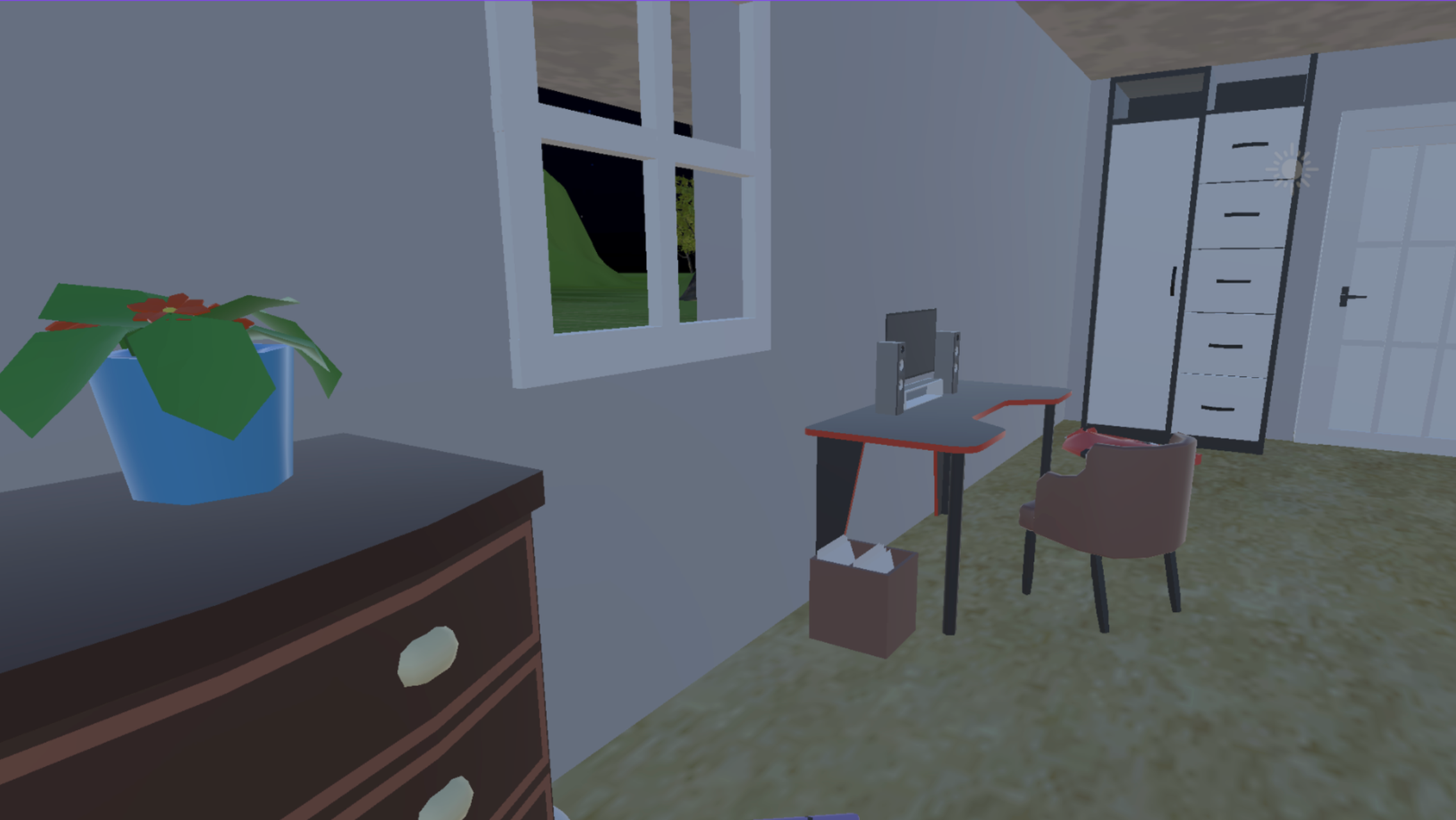
Visual References & Moodboard
(These images do not feature the final design just mockups I made inside the environment during the process)
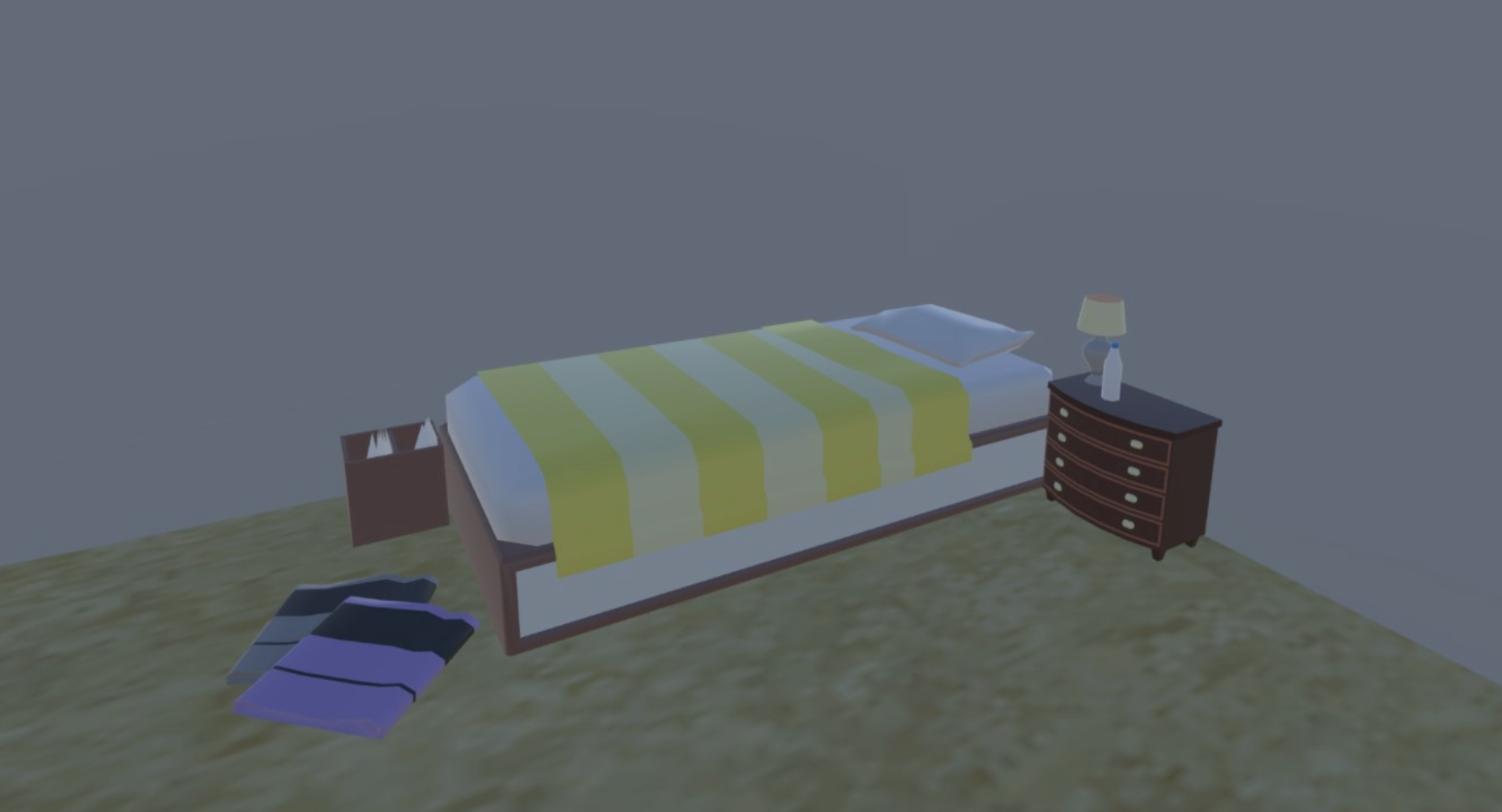
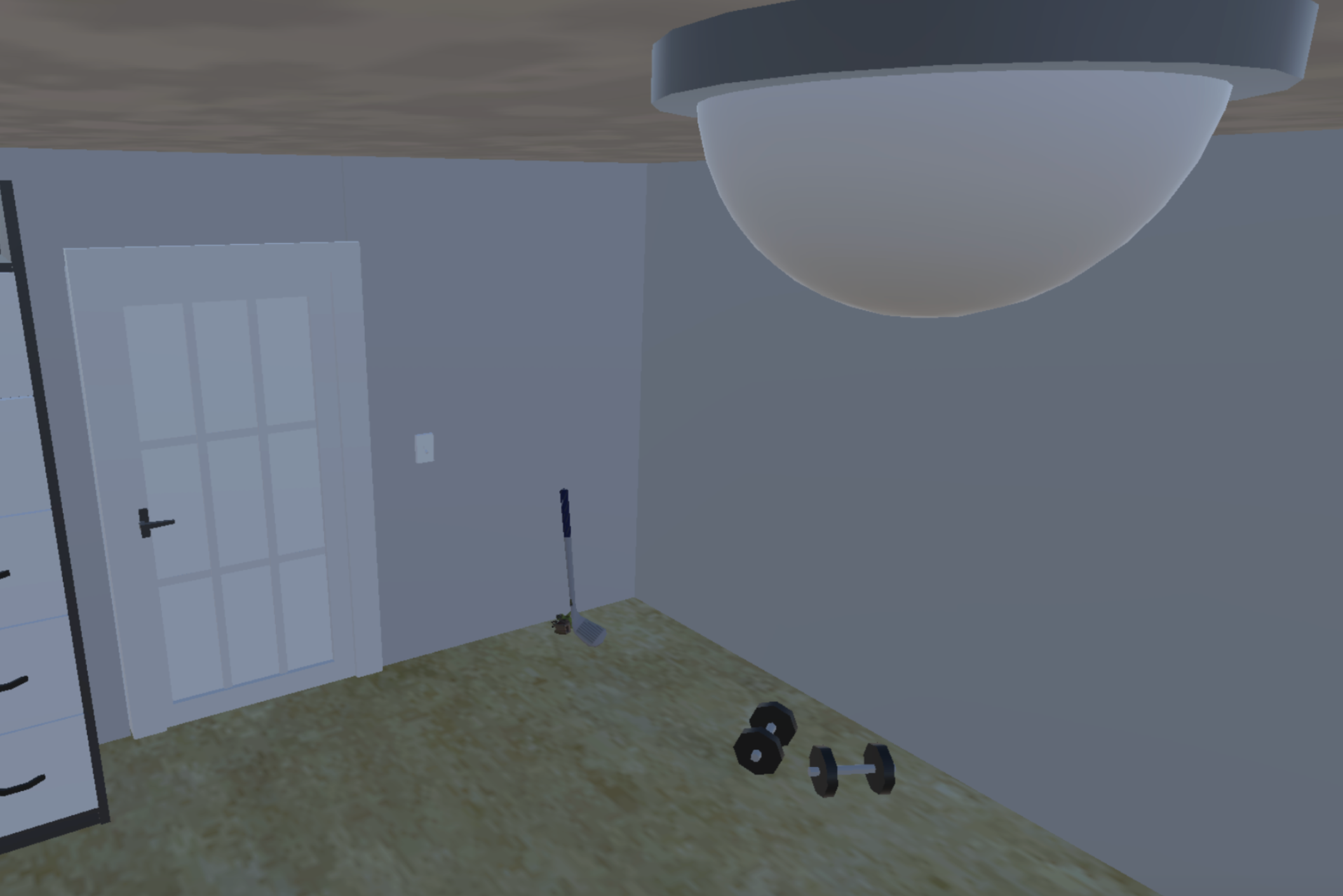
VR Integration & Playtesting
I tested the environment early in VR to understand how users naturally moved within the space. Play-testing revealed that users:
Leaned toward the window to listen to the rain
Looked around the room to identify the source of the music
Crouched to inspect objects on the floor or lower shelves
This informed adjustments to object placement, audio radius, and lighting angles.
Challenges & Solutions
Challenge: Getting the rain to feel natural and visible from the window.
Solution: Used Unity particle systems with adjusted emission, size, and collision to simulate realistic rainfall.
Challenge: Making the room feel lived‑in without overwhelming the user.
Solution: Curated clutter and placed objects at natural interaction heights to encourage exploration.
Challenge: Balancing audio layers without muddying the soundscape.
Solution: Used spatial audio falloff curves and low‑frequency ambience to separate rain and music sources.
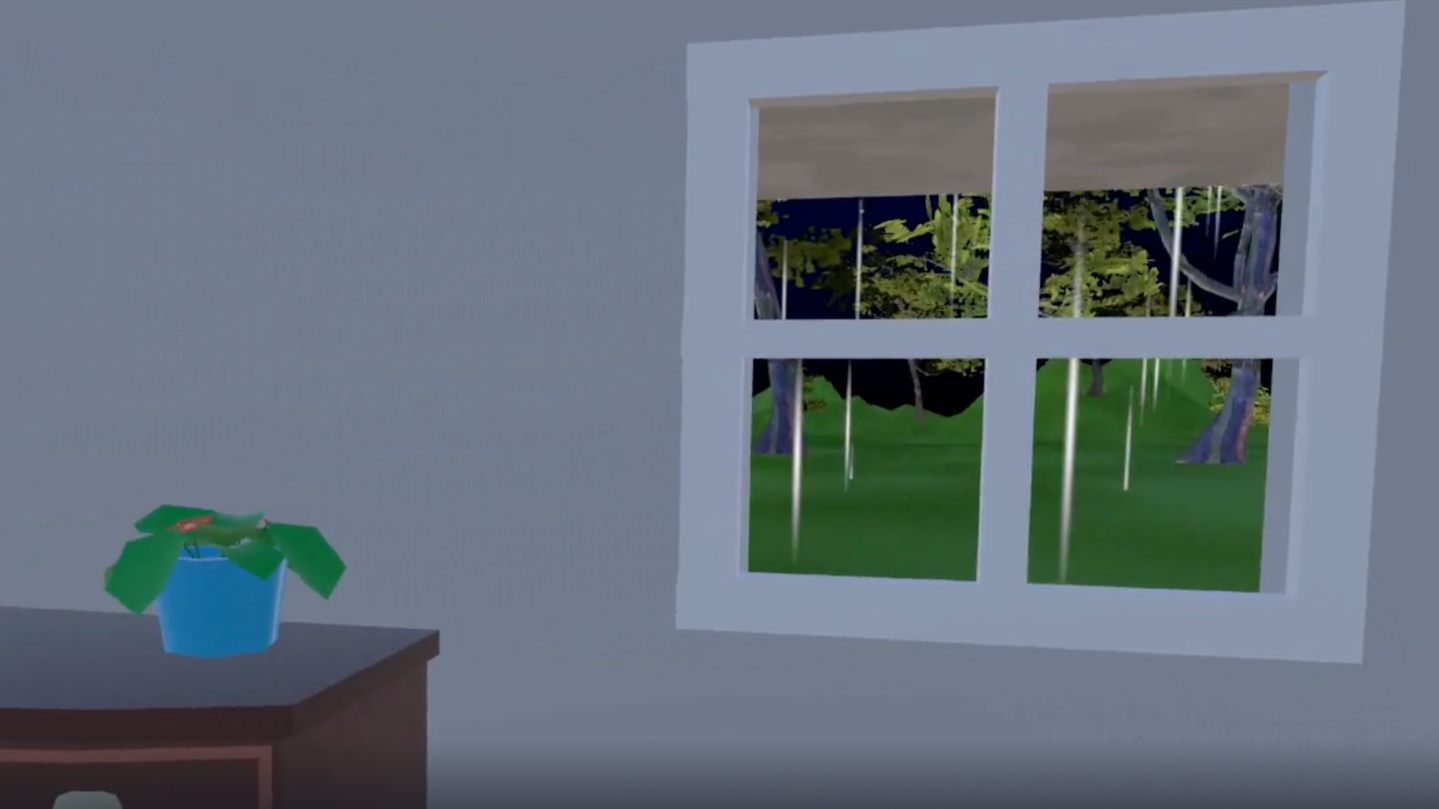
Particles outside the window made to look like rain.
Final Experience
The final micro‑world is a quiet, atmospheric bedroom that feels lived‑in and emotionally grounded. Users enter a small space filled with personal objects, warm lighting, and layered audio cues that create a sense of presence.
Key Features
Rain particle system outside the window
Directional audio that shifts as the user moves
A cluttered, believable bedroom layout
A subtle narrative implied through sound and environment
A sensory experience that encourages slow, intentional exploration
Emotional Impact
The world is designed to make the user feel:
Safe
Curious
Nostalgic
Present
It’s a space thats meant to feel like someone’s home — maybe even their own.
Future Development
If developed further I would add:
Interactive Light Sources — Allowing users to toggle lamps or adjust lighting to deepen immersion and give the room a more dynamic emotional range.
Environmental Interactions — Adding small, tactile interactions such as opening drawers, picking up objects, or adjusting curtains to enhance presence.
Dynamic Weather System — Expanding the rain into a full weather cycle with thunder, lightning, or shifting ambience to create evolving mood states.
Expanded Audio Layers — Introducing reactive audio that changes based on user movement, such as footsteps on different surfaces or objects that subtly respond to touch.
Narrative Touchpoints — Adding small story clues (notes, photos, objects) that hint at who lives in the room, creating a deeper emotional connection.
Enhanced Visual Effects — Incorporating dust particles, soft volumetric lighting, or subtle screen‑space effects to heighten atmosphere.
Retrospective
This project highlighted the unique challenges and opportunities that come with designing a VR environment that relies entirely on sensory cues rather than gameplay. Working on Sensational Spaces reinforced the importance of:
Iterating early in VR — Testing the space inside a headset revealed how users naturally move, look, and listen. These insights shaped object placement, audio zones, and lighting far more effectively than desktop previews.
Balancing detail with performance — VR requires careful optimization. I learned how to choose assets and lighting techniques that preserved atmosphere without overwhelming the system.
Using sound as a storytelling tool — The layered rain and distant music became the emotional backbone of the experience, proving how powerful spatial audio can be in shaping presence.
Designing for the body, not just the eyes — Users crouched, leaned, and turned instinctively. Designing with these movements in mind made the space feel more natural and alive.
Overall, this project strengthened my ability to craft emotionally resonant VR environments, blending technical art with sensory storytelling. It deepened my understanding of how small, intentional details can transform a simple room into a world that feels personal, atmospheric, and worth lingering in.